Antique Jewellery Repair & Restoration in London
Antique jewellery deserves an approach that respects both its age and the way it was originally made. A Victorian ring, Edwardian brooch, Georgian pendant or Art Deco platinum setting may have survived decades of wear, previous repairs and changes in ownership. Claws can become thin, hinges and clasps can loosen, shanks can wear through, stones can move in their settings and earlier repair work may no longer be secure.
At JWRR London, we carry out antique jewellery repair and restoration in our London workshop, assessing each piece individually before any work begins. The aim is not to make an antique piece look newly manufactured. Wherever possible, we preserve its proportions, period details and character while repairing the areas that have become worn, damaged or unsafe to wear.
Antique Jewellery Repair Online, by Post or in London
You do not need to live in London to use our antique jewellery repair service. Customers across the UK can start remotely by sending clear photographs by WhatsApp or email. We recommend including a photograph of the complete item, close‑ups of the damaged area and images of any loose stones, broken links, clasps or components that have become detached.
Photographs can help us understand the type of repair involved. For an accurate quotation, however, the jewellery normally needs to be examined in person. Wear to claws, old solder joints, cracks in settings, movement around stones and weakened hinges are not always visible in a photograph.
You can book a free assessment at our London workshop, or contact us before posting the piece to us.
Sending Antique Jewellery by Royal Mail Special Delivery
For valuable jewellery sent within the UK, we recommend Royal Mail Special Delivery Guaranteed rather than ordinary Signed For post.
Royal Mail Special Delivery Guaranteed provides full tracking, a photo and signature on delivery, with compensation options available depending on the service selected and the declared value of the item. Please check Royal Mail's current terms and compensation limits before posting valuable jewellery.
Before sending an antique piece, contact us so that we know to expect it and can confirm the correct workshop details. Place the jewellery in a secure jewellery box or protective container, then use discreet outer packaging. Include your name and contact details inside the parcel and keep your proof of posting and tracking reference.
When your jewellery arrives, we confirm receipt and assess it at the workshop before any restoration work is authorised.
What We Repair and Restore
Our antique jewellery work can include rebuilding worn platinum and gold settings, repairing shanks, restoring hinges and clasps, re‑tipping or rebuilding claws, replacing missing stones, repairing brooch fittings, remaking damaged links, restoring chains and securing loose stones. For period rings requiring structural work, see our antique ring repair service, while damaged pins, catches and fittings can be assessed through our brooch repair service.
We work on antique rings, bracelets, necklaces, pendants, lockets, brooches and earrings, including pieces set with old‑cut diamonds, sapphires, rubies, emeralds, pearls and other coloured gemstones. Where a stone has been lost, our diamond replacement and gemstone replacement services allow us to source a replacement suited to the size, cut and appearance required by the original setting.

Free Antique Jewellery Repair Assessment
The first stage is an assessment of the complete piece, not only the most obvious fault.
A missing stone may be the result of worn claws around the setting. A broken bracelet clasp may also have wear in the hinge. A distorted ring shank can place additional pressure on an old platinum or gold mount.
We therefore inspect the jewellery as a whole before recommending the work required. Where appropriate, we can discuss different restoration options depending on the condition of the piece and how much original material can safely be retained.
Specialist Stone Re‑Cutting, Resetting & Setting Restoration
Some antique repairs require both jewellery work and specialist lapidary work.
One sapphire and diamond platinum ring recently restored in our workshop required the central blue sapphire to be removed, carefully measured and assessed before being re‑cut. The platinum setting surrounding the centre stone had become worn, so the supporting areas were rebuilt before the re‑cut sapphire could be securely reset.
A missing stone was also replaced, while the surrounding old‑cut diamonds and sapphire accents were checked and secured. Where settings have become worn or stones have started to move, our diamond and gemstone setting service covers the rebuilding, securing and resetting work required before the jewellery can be worn safely again.
This is exactly why an antique jewellery restoration needs to be considered as a complete structure. Re‑cutting or replacing a stone without addressing a worn setting can leave it vulnerable, while rebuilding a mount without understanding the original stone shape can alter the appearance and proportions of the ring.
The same principle applies to other pieces we restore. An antique bracelet may require a hinge or clasp to be rebuilt, a necklace or chain may need damaged links remade and missing seed pearls matched, while an antique brooch may require work to its pin, clasp, stone settings or worn decorative sections.
From a straightforward antique clasp or chain repair to a more involved restoration combining stone replacement, lapidary work, platinum rebuilding and resetting, our objective remains the same: to make the jewellery secure and wearable again while respecting the original piece.
Why Antique Jewellery Requires a Different Kind of Care
Antique jewellery repair is not the same as fixing a modern ring. Modern jewellery is designed for efficiency and scale — standard castings, uniform alloys, and computerised processes. Antique jewellery, by contrast, was born out of hand fabrication, custom metallurgical blending, and intricate manual assembly.
Using unsuitable modern repair methods on antique jewellery can cause irreversible damage. Standard torch soldering transfers high heat across metal shanks, which can shatter delicate Victorian or Art Deco gemstones. Hand‑engraved scrollwork and delicate milgrain borders — those fine beaded edges that define vintage aesthetics — are easily erased by standard high‑speed polishing wheels.
That is why we never use a one‑size‑fits‑all approach. Every piece is assessed individually, and every restoration is carried out with historical preservation at the forefront of our minds.
Historic jewellery can contain alloys, solders and previous repairs that behave differently from modern workshop materials. Our craftsmen understand these historical techniques and know exactly how to work around them.
Period Expertise
Antique Jewellery Eras We Restore
Each jewellery era had its own distinctive construction methods, alloys, and aesthetic conventions. We restore each piece appropriately — never imposing modern techniques on period pieces.
Georgian 1714–1837
Georgian jewellery broadly covers the period from 1714 to 1837, encompassing the reigns of George I through George IV and, in many jewellery classifications, the years immediately following until the beginning of the Victorian era. This era was characterised by ornate metalwork, hand‑fabricated in gold of varying caratages. Diamonds of varying shapes characterised Georgian jewellery, particularly rose and old mine cut diamonds, which were arduously faceted by hand — a testament to the craftsmanship of the era.
Georgian jewellery is easily identifiable due to the combination of silver and gold, with the irregular facets of old‑cut diamonds shining with a refined and romantic sparkle. Natural pearls were very rare and therefore very expensive. Semi‑precious stones such as garnet, turquoise, topaz, and amethysts were also widely used.
Common Georgian repairs we carry out:
- Rebuilding worn shanks
- Replacing old‑cut diamonds
- Restoring closed‑back settings
- Repairing delicate filigree work
- Sourcing period‑appropriate gemstones
Victorian 1837–1901

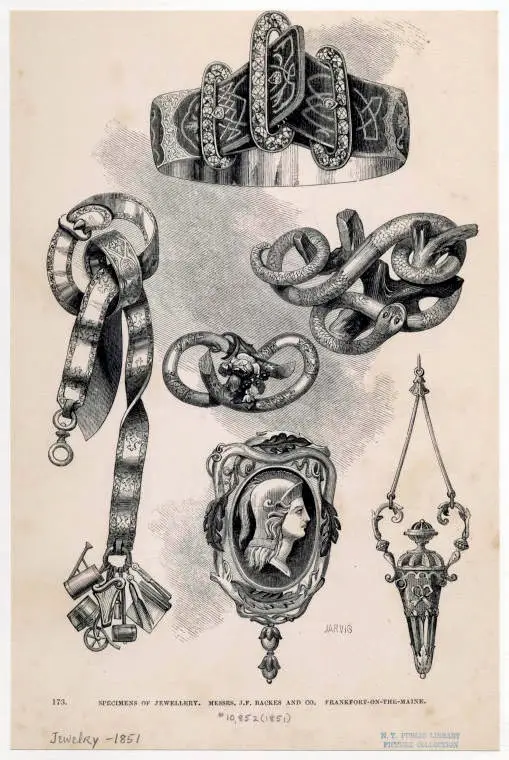
Victorian jewellery was influenced by the sentimental and romantic nature of the era. Popular motifs included flowers, hearts, birds, snakes and crescent moons. Mourning jewellery became highly fashionable after Queen Victoria's extended period of mourning.
Flora played an important role in Victorian jewellery to express hidden meanings — this was known as floriography. Celestial stars and sun motifs in all forms — be it brooches, rings, necklaces or lockets — were highly sought after. Pearls were associated with purity, chastity and grace. Crafted predominantly from rose or yellow gold, Victorian jewellery featured symbolic designs with delicate enamel and intricate engraving.
Common Victorian repairs we carry out:
- Re‑tipping claws
- Restoring enamel work
- Replacing rose‑cut diamonds
- Repairing lockets and brooch clasps
- Sourcing period‑appropriate coloured gemstones
Art Nouveau 1890–1910
The Art Nouveau movement was a relatively short period in jewellery history, lasting from 1895 to 1910. Long, soft, flowing lines, femininity, asymmetry, insect, bird, and floral motifs characterised Art Nouveau jewels. Free‑flowing lines, sometimes called the "whiplash" line, were a defining feature.
Art Nouveau jewellers strived to remove the constraints of precious metals and gemstones and instead embraced a canvas created from organic materials, such as ivory, horn, and moulded glass. Precious stones were used as accent stones to the subtler colours of opal, topaz, amethyst, aquamarine, and demantoid garnet. Baroque pearls dangled from pendants or brooches to represent pods or petals.
Common Art Nouveau repairs we carry out:
- Restoring enamel work
- Repairing delicate filigree
- Replacing opals and other period‑appropriate stones
- Preserving the patina of organic materials
Edwardian 1901–1915
The Edwardian period brought a lighter, more romantic feel to jewellery, sitting gracefully between the richness of the Victorians and the fluid lines of Art Nouveau. Designs became airy and lace‑like, with advances in metalwork allowing jewellers to use platinum and fine gold to create intricate, almost weightless settings.
Edwardian jewellery is known for its elaborate lace‑like designs, especially featuring platinum and diamonds but also colourful gemstones. Garlands and ribbons, laurel wreaths, bow knots, tassels and lace were brought to life using platinum and precious gems. Millegraining allowed artists to create pieces that were softer and lighter in appearance. Pearls, vibrant green jade, captivating opals, and deep red rubies resulted in stunning creations.
Common Edwardian repairs we carry out:
- Restoring platinum filigree work
- Re‑tipping claws
- Replacing old European‑cut diamonds
- Repairing milgrain detailing
- Preserving lace‑like openwork settings
Art Deco 1920–1935
To be Art Deco in the period from 1920 to 1935 was to be decidedly modern. The style was a blend of many influences, including the geometry and abstraction found in the work of the Cubist painters and the exotic colour combinations of the Ballets Russes.
Diamond‑set geometric patterns and forms with flat and linear symmetrical designs, often with an architectural effect and accented with coloured stones, were iconic aesthetics of the era. Platinum was favoured because its strength allowed minimal quantities of metal to be used, giving the stones the greatest possible prominence. Coloured gemstones, including rubies, emeralds, coral and jade, packed a vibrant punch.
Common Art Deco repairs we carry out:
- Restoring geometric platinum settings
- Replacing baguette and emerald‑cut diamonds
- Sourcing period‑appropriate coloured gemstones
- Rebuilding stepped or architectural settings
Retro 1939–1949 & Mid‑Century 1950s
Retro jewellery was influenced by the onset of World War II and shortages of precious metals and gemstones due to embargoes. More semi‑precious and synthetic gemstones were used in pieces. Gold became the dominant metal as platinum was reserved for military use. Large, bold designs with curved, sculptural forms were popular, often featuring rubies, sapphires and aquamarines set in yellow or rose gold.
The post‑war era brought a return to glamour and optimism. Jewellery designs became more playful and sculptural, with abstract forms and asymmetrical compositions. Gold remained the dominant metal, often textured or woven. Gemstones included aquamarines, citrines, topaz and amethysts, frequently set in stylised, modernist mounts. Brooches and bold cocktail rings were particularly fashionable during this vibrant period.
Common Retro and Mid‑Century repairs we carry out:
- Restoring bold gold settings
- Replacing aquamarines and citrines
- Repairing sculptural forms
- Preserving textured gold finishes
Our Process
How We Restore Antique Jewellery
Detailed Assessment
We begin with a thorough examination of your jewellery, assessing its condition, construction, stones and any previous repairs. Where required, non-destructive testing can help us identify the metal composition and fineness before restoration begins.
Period‑Appropriate Restoration
Where stones are missing, we source period-appropriate replacements, including old-cut diamonds and coloured gemstones where required. The size, cut and appearance are selected to work naturally with the original jewellery.
Patina Preservation & Finishing
Over‑polishing destroys age‑earned character and value. We preserve the patina and historical integrity of your piece while addressing structural issues and restoring its beauty.
Services & Materials
Types of Antique Jewellery We Restore
Antique Jewellery Metals We Restore
Whether your ring has been worn thin, misshapen or completely broken, we can rebuild the shank entirely or add the missing precious metal.
Workshop Case Studies
Real Antique Jewellery Restorations
Real examples of antique jewellery restored in our Hatton Garden workshop.
Sapphire Re‑Cut, Platinum Rebuilding & Resetting
A sapphire and diamond platinum ring arrived at our workshop requiring extensive work around the central blue sapphire and its setting. Before any restoration began, the sapphire was measured and its existing shape assessed so that the lapidary work could be planned around the original antique mount.
The sapphire was carefully removed and sent for specialist re‑cutting. At the same time, the platinum surrounding the centre stone was assessed and rebuilt where necessary so that the re‑cut sapphire could be properly supported when returned to the ring.
A missing stone was also replaced and reset, while the surrounding old‑cut diamonds and blue sapphire accents were checked for security. Once the stone‑setting work was complete, the central sapphire and surrounding stones were professionally cleaned and the platinum mount was carefully polished and finished.
This restoration combined lapidary work, platinum rebuilding, replacement stone setting and final resetting, allowing the ring to remain faithful to its original design while making the setting secure again.

Napoleon III Gold, Enamel & Garnet Cuff Restoration
This antique Napoleon III jewellery set combines an ornate gold cuff with white enamel and deep-red garnet decoration, together with its matching brooch. The cuff came to our London workshop requiring work to the original hinge and clasp mechanism.
The hinge had become worn and required repair so that the bracelet could open and close correctly. The clasp was also restored to provide a secure fastening. Particular care was needed around the antique gold work, enamel decoration and garnet settings while the mechanical areas of the cuff were being repaired.
The matching brooch was also carefully inspected and restored, with attention paid to the central garnet setting, white enamel work and detailed gold decoration. The aim throughout was to preserve the original appearance of the Napoleon III set rather than make the jewellery look newly manufactured.
Once the structural work was complete, the cuff was checked for smooth movement and secure closure, while both pieces were carefully cleaned and finished. The photographs show the complete antique set, a close-up of the restored brooch and the repaired cuff mechanism.

Antique Seed‑Pearl Necklace Link Restoration
An antique gold necklace with small seed pearls and delicate floral and foliate detailing required restoration after a number of links had become worn or damaged and some pearls were missing.
Sections of the original link work were carefully examined so that replacement links could be made to suit the existing construction and proportions of the necklace. Missing seed pearls were matched as closely as possible to the size and appearance of the original pearls before being fitted into the appropriate settings.
The necklace was then checked throughout for further wear, including the suspension points and connections between the decorative sections. The aim was to restore the damaged areas without making the new work visually dominate the surviving antique sections.

Common Questions
Antique Jewellery Repair FAQs
Answers to the most common questions about antique jewellery repair and restoration.
Yes. Our approach to antique jewellery repair focuses on preserving the original character, patina and period details of each piece. Every item is assessed individually and the repair method is chosen according to its construction, materials and condition. We avoid unnecessary replacement of original components and excessive polishing, with the aim of making the jewellery secure and wearable while respecting the original piece.
Yes. Customers across the UK can send their antique jewellery to us by post. We recommend using Royal Mail Special Delivery Guaranteed for valuable items. Learn more about our postal service.
Place your jewellery in a secure box or protective container, then use discreet outer packaging. Include your name and contact details inside the parcel. Royal Mail Special Delivery Guaranteed provides full tracking and compensation cover. Read our full postal guidance.
Yes. We specialise in sourcing and replacing old‑cut diamonds, including rose cuts, old mine cuts and old European cuts. We match the size, colour and cut style of the original diamond as closely as possible. Learn more about our diamond replacement service.
Yes. We rebuild worn platinum settings, re‑tip claws and restore damaged mounts. Platinum is a challenging metal to work with, requiring specialist skills and equipment. Our craftsmen have extensive experience in platinum restoration.
We work with a specialist lapidary who can assess, re-cut and polish antique sapphires and other gemstones where appropriate. The stone is then carefully reset into the original mount once the setting has been rebuilt if necessary. View our sapphire case study.
Yes. We regularly repair or rebuild antique clasps, hinges, safety chains, brooch pins and other fittings. These components are often the most vulnerable parts of an antique piece and require careful attention to function correctly while preserving the period appearance. Learn more about our brooch repair service.
Costs vary depending on the type and complexity of the restoration required. We provide a detailed, no‑obligation quotation after assessing your piece in person. Book a free assessment to receive an accurate estimate.
Preserving History, One Piece at a Time
From Georgian heirlooms to Art Deco treasures, we treat every antique piece with the skill, patience and historical knowledge it deserves. As part of our wider jewellery repair and restoration service in London, antique pieces can be assessed in our workshop or sent to us securely by post from across the UK.
If you are unsure whether your antique jewellery can be repaired, send us photographs by WhatsApp or email, book a free workshop assessment in London, or contact us before sending your piece by Royal Mail Special Delivery.
Our London Workshop
Visit Our Antique Jewellery Repair Workshop in London
Visit our specialist antique jewellery repair workshop in London for a free assessment. We are based around Farringdon Station and welcome appointments Monday to Saturday.
Jewellery Watch Repairs & Restoration London Unit 2, 1–2 Kirby Street
Hatton Garden, London EC1N 8TS
andrestoration-london.co.uk
Free Assessment